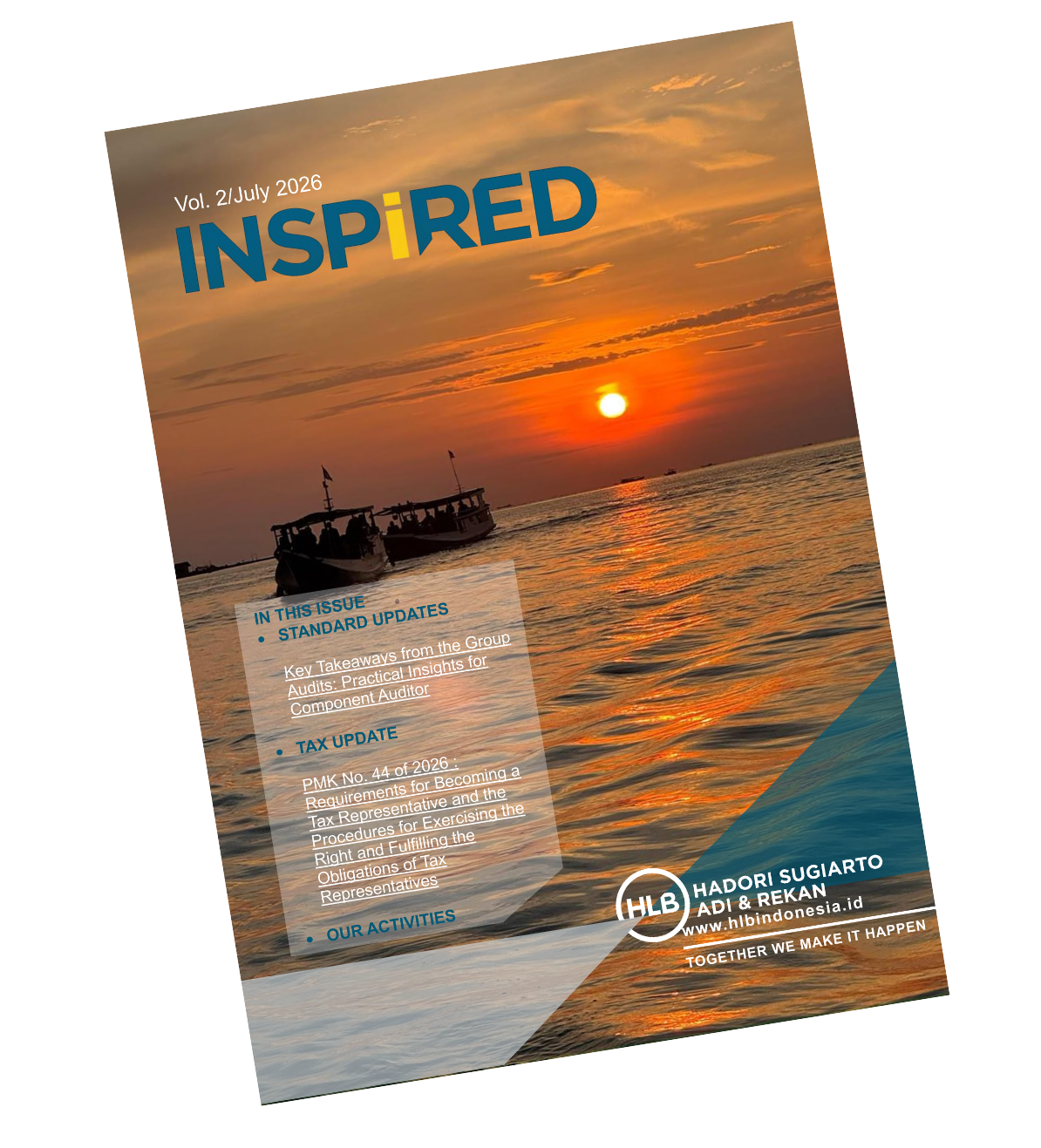


INSPIRED VOL.2/JULY 2026: PRACTICAL INSIGHTS FOR THE COMPONENT AUDITOR AND NEW REGULATIONS ON TAX REPRESENTATIVES
STANDARD UPDATES - TAX UPDATE - OUR ACTIVITIES
Key Takeaways from the Group Audits:
Practical Insights for the Component Auditor
As businesses expand across jurisdictions, group audits increasingly involve Component Auditors working across different countries, regulatory environments, reporting timelines, accounting practices and communication. While SA 600 sets out specific responsibilities for the Group Auditor, the quality, timeliness, and responsiveness of the Component Auditor’s work also an important role in supporting an effective group audit.
In practice, challenges in the group reporting process may arise not only from technical accounting matters but also from communication gaps, insufficient audit documentation and audit matters that are not identified, communicated or resolved on timely basis.

PMK No. 44 of 2026 : New Regulations on Tax Representatives
The Government of Indonesia, through the Directorate General of Taxation (DGT), had officially issued the Minister of Finance Regulation (PMK) No. 44 of 2026 on the Requirements for Becoming an Authorized Tax Representative and the Procedures for Exercising Rights and Fulfilling Obligations as a Tax Representative. This regulation revokes and replaces the Minister of Finance Regulation No. 229/PMK.03/2014 on the Requirements and the Exercise of Rights and Obligations of Taxpayer Representatives, which had been in effect for more than a decade, in order to align the regulations governing tax representatives with the current developments in the tax administration system.
The new regulation sets out who is eligible to act as a taxpayer's representative and the requirements they must meet, while also simplifying the procedures for granting, carrying out, and ending such authorization to make the process more transparent, well-documented, and integrated with the DGT's system. In addition, the policy aims to strengthen the integrity and professionalism of tax representatives in exercising taxpayers' rights and fulfilling their obligations, while providing legal protection for taxpayers, representatives, and the DGT through clear regulations on rights, obligations, and oversight mechanisms.